Computational Biophysics · Brock University

We study how life works with light.

The Kaur Lab uses theoretical chemistry to understand how proteins convert light into chemical energy—and how nature’s molecular strategies can inspire new catalysts and biomaterials.

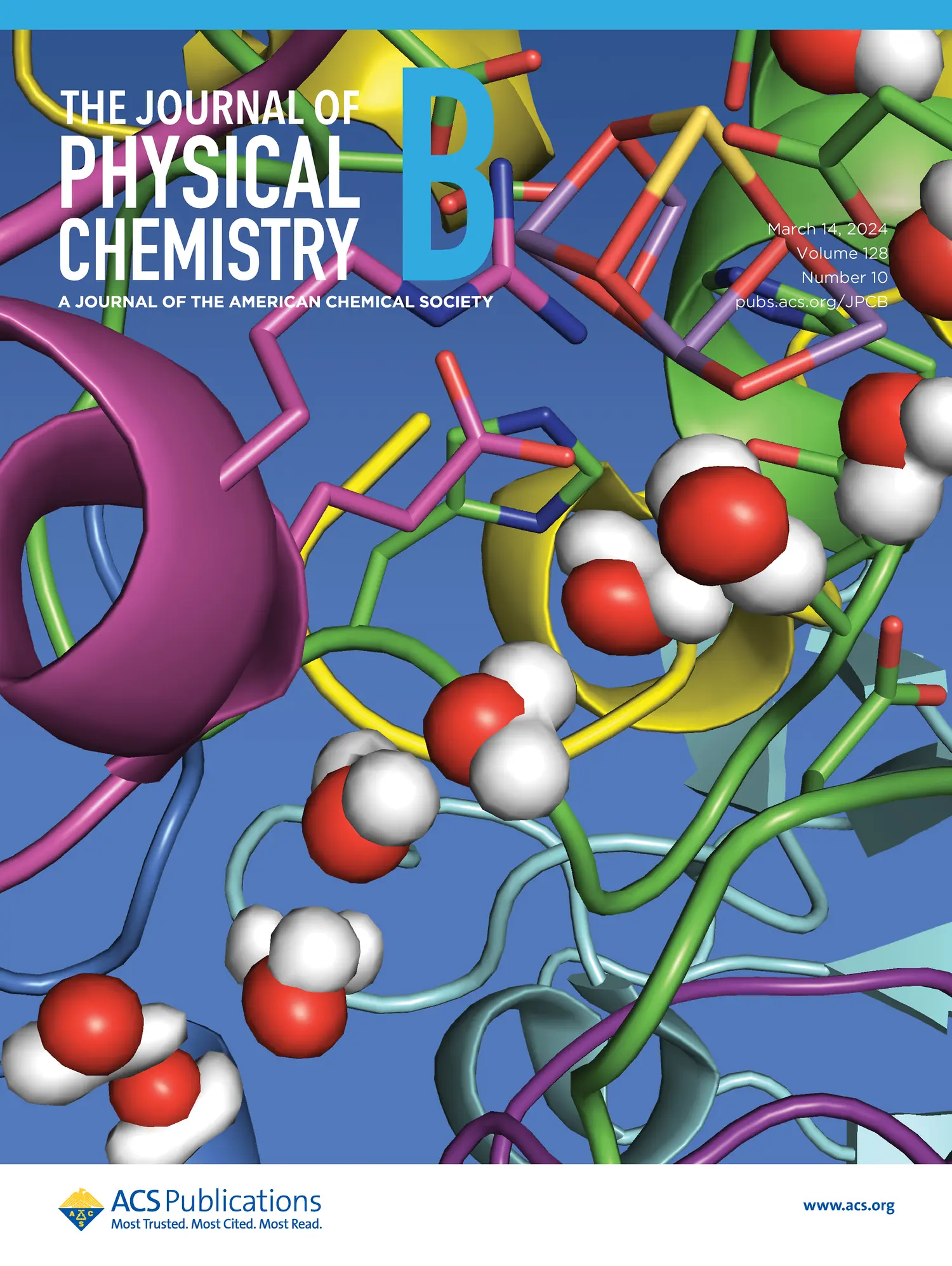
The Journal of Physical Chemistry B cover featuring molecular structures and water networks from Kaur Lab research
Featured journal cover The Journal of Physical Chemistry B · March 2024

Our focus

From understanding natural photosynthesis to designing new light-powered systems.

Photosynthesis is more than a biological pathway. It is a molecular blueprint for capturing energy, moving electrons and performing chemistry with remarkable precision. We investigate that blueprint across three connected research programs.

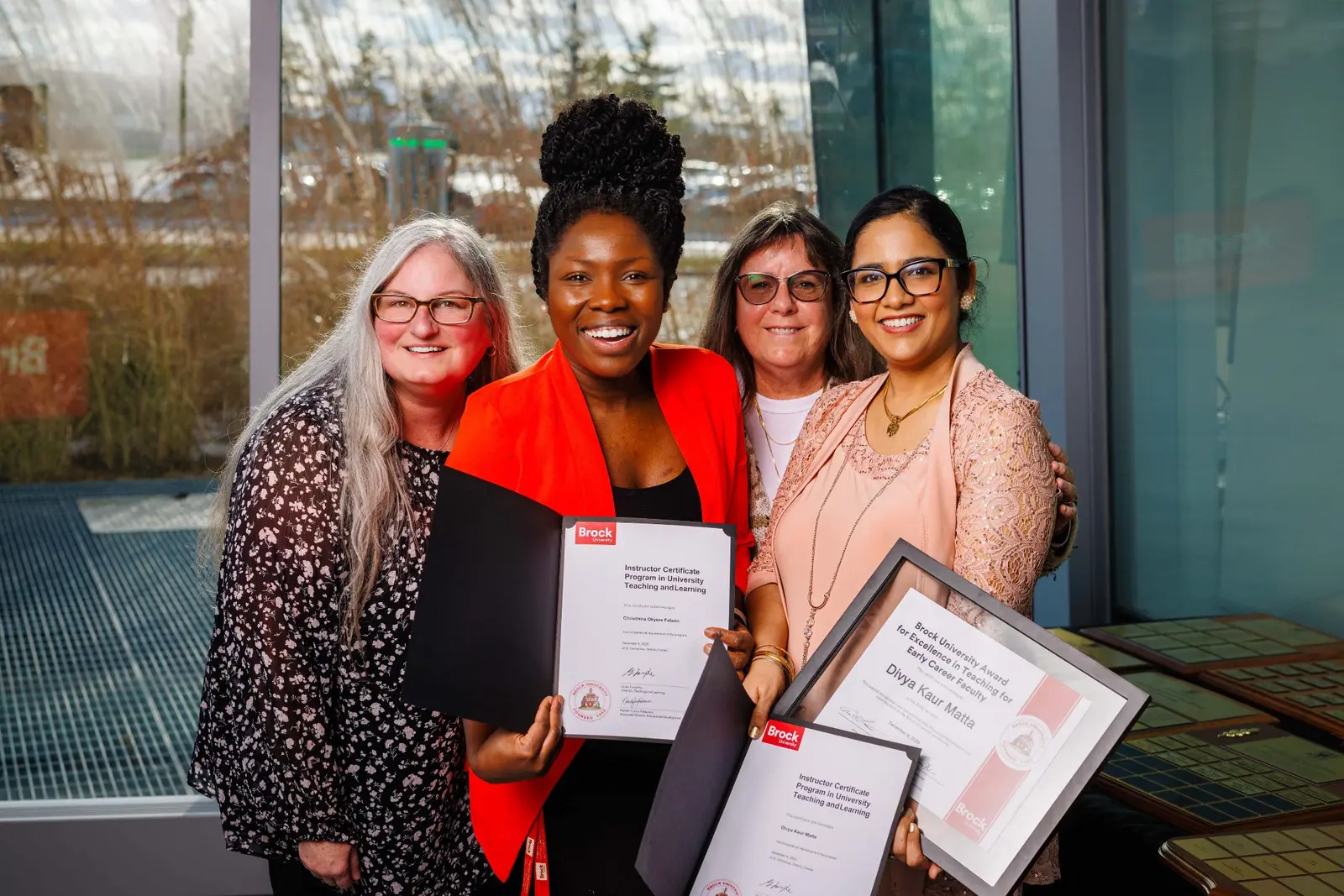
Professor Divya Matta Kaur delivering a Brock University convocation address
Prof. Divya Matta Kaur delivering Brock University’s June 2026 convocation address

Carry the light forward

Transformation, mentorship and making possibility visible.

The 2026 address draws a human lesson from photosynthesis: a leaf receives changing conditions, organizes what comes and transforms light into something life-giving. Education can do the same with questions, pressure, mistakes and uncertainty—turning them into knowledge, confidence and possibility.

Its invitation is to begin before feeling completely ready, learn from mentors and then become that person for someone else. Success becomes meaningful when knowledge is used to create clarity, courage, hope and opportunity for others.

“How can I make this room better because I am here?”Prof. Divya Matta Kaur · Convocation 2026
Far-red photosynthesis

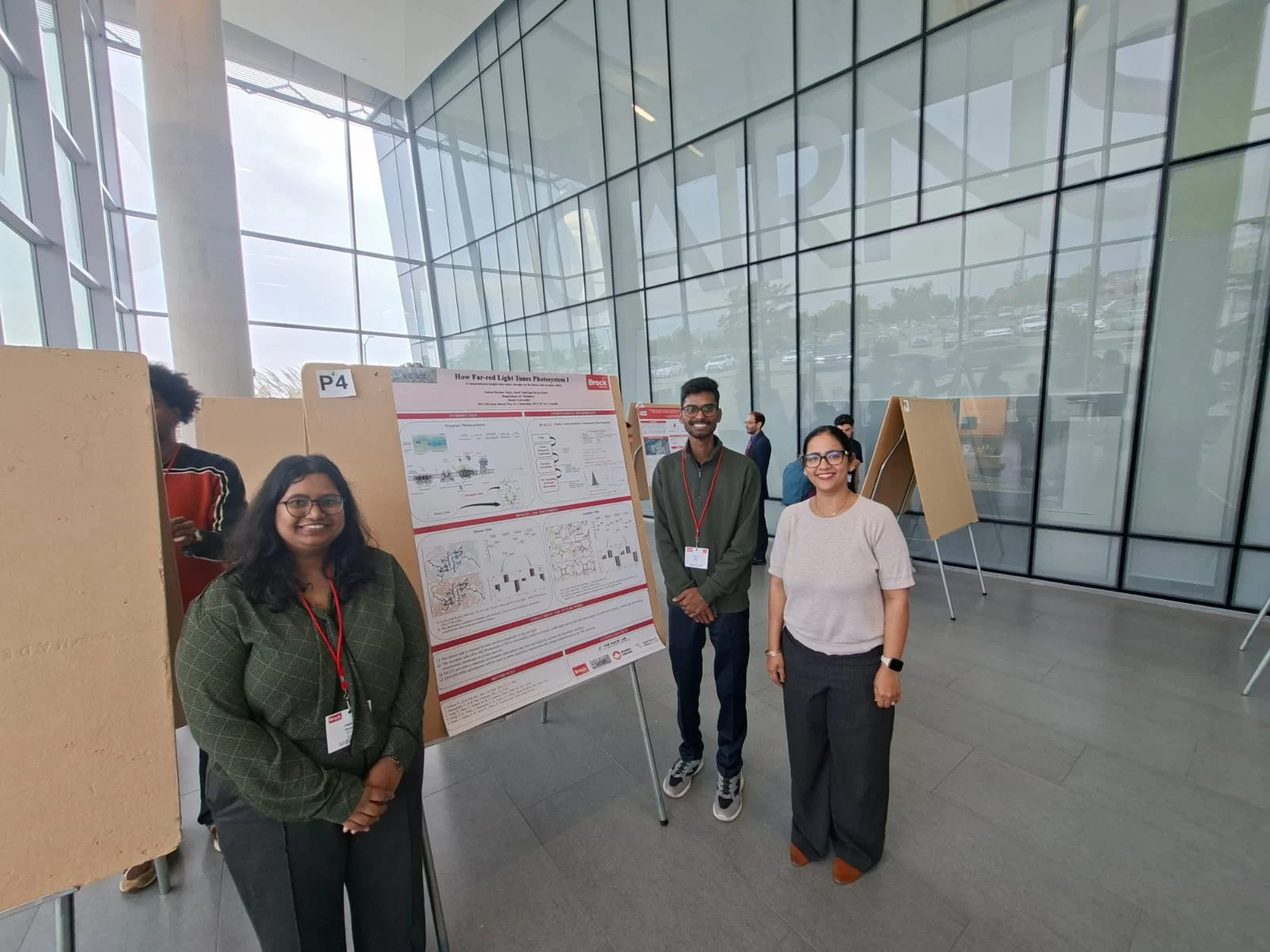
How do photosynthetic proteins use photons at the edge of the visible spectrum? We study how pigments, proteins, waters and redox cofactors work together to support charge separation and electron transfer under far-red light.

View projects

Artificial catalysis

We translate molecular principles from natural photosynthesis into computational strategies for coupling biological light capture with synthetic catalysts and energy-conversion materials.

View projects

Photosynthetic biomaterials

We explore how computational biophysics can inform the design of photosynthetic and light-responsive biomaterials.

View projects

Our approach

Theory lets us see what experiments cannot resolve alone.

We combine molecular dynamics, continuum electrostatics, Monte Carlo sampling, density functional theory and QM/MM calculations. Working with experimental collaborators, we connect atomic structure to energetics, dynamics and biological function.

MDMCCEDFTQM/MMMicrostates

Recent progress

Science in motion

New work from the group is revealing how photosynthetic organisms fine-tune electron transfer when light conditions change.

All news

Chemistry education for everyone

Chemistry is not a gate. It is a language anyone can learn.

From a first equation in high school to undergraduate problem-solving, Chemistry Simplified by Prof. D Kaur breaks intimidating ideas into clear, encouraging steps. The goal is not simply to find an answer—it is to help every learner understand why it makes sense and believe they can do it.

High-school learnersUndergraduate studentsCurious minds
Learn with Prof. D Kaur on YouTube
Press play. Pause. Ask why. Try again.Learn at your own pace.
  1. 01
    Start with a question

    No question is too small, and uncertainty is part of learning.

  2. 02
    See the idea clearly

    Connect the mathematics, the chemical picture and the reason behind each step.

  3. 03
    Build lasting confidence

    Move from “I cannot do this” to “I know how to begin.”

Women in STEM · Many paths forward

There is more than one way to build a life in science.

Prof. Matta Kaur’s path includes migration, caregiving, two parental leaves and a non-linear route through research and teaching. Making that journey visible is part of helping more women and emerging scientists see a place for themselves in STEM.

Explore the journey and our culture of belonging