Belonging with standards
Inclusion and rigour reinforce one another. Group members should be able to ask questions, make mistakes, receive clear feedback and grow into independent scientists.
Scientific potential is not measured by how linear someone’s path has been. We are building a research environment where different identities, responsibilities and experiences can contribute to excellent theoretical chemistry.
Values in action
Inclusion and rigour reinforce one another. Group members should be able to ask questions, make mistakes, receive clear feedback and grow into independent scientists.
Expectations, authorship, milestones and opportunities are discussed openly. Mentoring plans adapt to each researcher’s goals rather than assuming one definition of success.
Caregiving, health, disability, employment and other responsibilities shape how people work. We focus on progress, communication and quality—not performative hours.
Equity is reflected in access to projects, authorship, presentations, conferences, leadership and professional networks—not only in a statement.
Women in STEM · The PI journey
Prof. Matta Kaur’s path includes migration, caregiving, two parental leaves and a non-linear route through research and teaching. Making that journey visible is part of helping more women and emerging scientists see a place for themselves in STEM.
Her path from India to the United States and then Canada shows that a meaningful STEM career can include detours, family responsibilities and non-linear transitions.
Graduated first in her class from SGTB Khalsa College, University of Delhi.
Completed graduate training at the University of Delhi as a gold medallist after qualifying UGC–NET in 2008.
Taught chemistry at SGTB Khalsa College before moving to the United States.
Completed doctoral research in photosynthetic water oxidation at The Graduate Center, City University of New York.
Defended her PhD in February, then joined Brock University for a short postdoctoral appointment with Prof. Art van der Est while also teaching as a sessional lecturer.
Started as an Assistant Professor of Chemistry in January and began building an independent computational photosynthesis program.
The group expanded its trainee community, collaborations, publications and research directions across two periods of parental leave.
A milestone reflecting rapid progress in research, teaching and mentorship—and a foundation for the lab’s next phase.
Lab life
Outings, celebrations and time together are part of the life of our research community.
Chemistry education for everyone
From a first equation in high school to undergraduate problem-solving, Chemistry Simplified by Prof. D Kaur breaks intimidating ideas into clear, encouraging steps. The goal is not simply to find an answer—it is to help every learner understand why it makes sense and believe they can do it.
No question is too small, and uncertainty is part of learning.
Connect the mathematics, the chemical picture and the reason behind each step.
Move from “I cannot do this” to “I know how to begin.”
Recognition
Recognition is meaningful because it reflects the students, colleagues and mentors who make teaching and research possible.
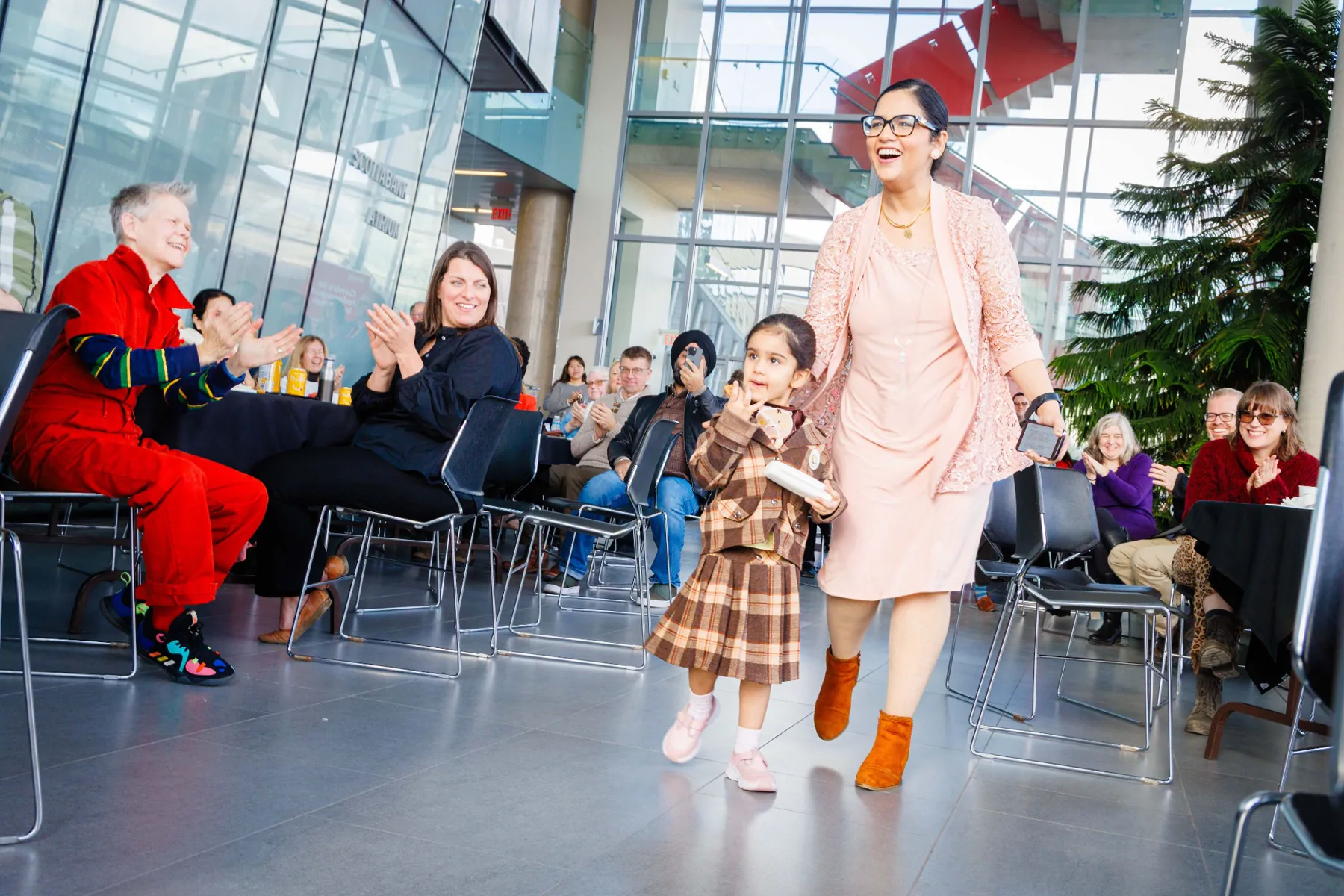
Why this moment matters. Her daughter joining her to receive the award placed family and academic achievement in the same frame. Making motherhood visible in spaces of recognition helps students and families see that caregiving and leadership in STEM belong together.
Recognition photographs ↗